

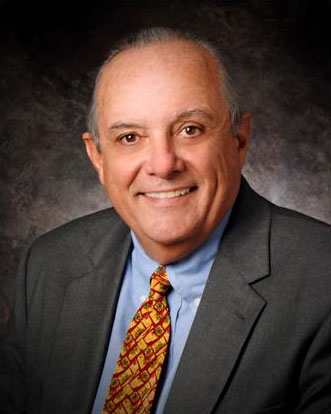
 Barry Cassidy
On May 15, I will begin my annual economic development survey of 70 cities. This is the fourth year, and I plan to make one more trip in 2027. I first took the trip in May 2021, when the Lockdown was winding down.
I classified every storefront using the North American Industry Classification System (NAICS), a standard framework used by federal agencies to classify business establishments for collecting, analyzing, and publishing statistical data on the U.S. economy. I averaged two or three cities per day. In places like the Bay Area, I could get four in a day because it is compact.
Last year, the total number of properties surveyed was 5,436, of which 4,175 were occupied, and 1,261 were vacant. The combined overall vacancy rate across all downtown/street-access locations is approximately 23.2 percent. This is significantly higher than the current national retail vacancy rate (around 4.3–4.4 percent for all retail properties)
In the first year, I counted the vacancies. I did not go out in 2022 because the recovery lagged, and I thought I would give it a chance to get up and running before I did the final four years of the longitudinal study. The next year, I did the store mix with vacancies. By the time I got to Seattle, I saw the US Bank Building closed, and entire streets were lined with vacant storefronts. The city was shrinking. And then I thought to myself, they aren’t going to come back soon, and it is almost like piling on with that kind of vacancy count.
In 2024, I defined target areas, which are the boundaries I believed marked the start and end of the commercial area. Last year, I compiled all the addresses and uses, which will make it much easier for me to complete the inventory this year. I speak with merchants and gather a little info here and there, but for the most part, the numbers don’t lie.
I documented conditions during the lockdown. It was pretty grim in Milwaukee; there was no one on the street. I mean, no one. I hooked up with a homeless person there, and we shot the breeze for a while. Then someone came out and took pictures of me taking pictures. I just kept talking to the guy and ignored it. In a way, it is better to do what you do and not do something just because they did something.
As an old man walking around with a $2000 camera by myself, you have to just go with it because you have a purpose: to observe, not participate. Not that I have not sampled some very good restaurants and stayed in some nice hotels, but for the most part I am invisible.
I am focusing my efforts on Portland. I really like Portland. I started collecting addresses and business names a year earlier than the rest. In 2021, everything was boarded, and there was a lot of protest art on the boards. By the time I went back in 2023, the boards had vanished, but there were still many vacancies. Many jewelry stores were set on fire, and last year most of those buildings were rehabilitated. It still has a pretty high vacancy rate, but they are making honest progress and coming back. I remember the official vacancy rate was announced at four percent in a news article. I knew that was neither correct nor close.
Traveling between cities can be a pleasant experience or a very trying one. I like to put it on cruise control and listen to some of the great courses I have downloaded to my phone. There is a stretch between Memphis, TN, and Sulphur Springs, TX, that has too many trucks on the road, and that part of the drive is difficult. Driving along the Texas border is very easy, with few cars on the road, and it features periodic sections of a four-lane highway. Much of that area has no cell phone service. I also noticed that Bluetooth would disconnect periodically.
The list of cities has been somewhat dynamic, and I have dropped cities like Salton Sea, CA, and Gary, ID, because they are not representative of anything beyond themselves. Gary has three open commercial entities and a 92 percent vacancy rate. Salton Sea was as contaminated as ever.
I am monitoring two redevelopment projects: one in Indio, CA, and another in the Austin, TX, Capitol area. Both are making progress, and the landscape is changing quickly. In Memphis, Minneapolis, Louisville, Austin, and a couple of areas in San Francisco, I surveyed the entertainment districts. In some cases, I covered the entire downtown because it was well-defined and not shrinking in terms of viable streets, as in Seattle, and it takes about two or three hours to cover a town.
Once I get my inventory, I will analyze it and determine whether factors such as Interest Rates / Monetary Policy strongly affect borrowing costs for businesses, developers, and landlords, resulting in higher rates and less expansion, which in turn leads to more closures and slower leasing.
Consumer Spending / Retail Sales Growth directly drives retail and hospitality vacancies. I will track the year-over-year percentage change in real personal consumption expenditures or retail trade sales. Check on E-commerce Growth / Online Retail Penetration, measured as the percentage of total retail sales online or as year-over-year growth in e-commerce. It hits brick-and-mortar retail hard (especially non-essential NAICS codes).
Tourism/Visitor Numbers, hotel occupancy, airport passengers, or convention attendance are critical for hospitality and for downtown retail and restaurants. Small and large cities differ sharply here. Foot traffic is also affected by Remote/Hybrid Work Adoption Rate, which complements the office occupancy factor, determining the percentage of workers in hybrid/remote roles.
High construction costs for a new supply pipeline (or building permits for commercial space) slow new development which can keep vacancy lower long-term, but legacy oversupply hurts. Also, Minimum Wage Increases or Labor Costs hit hospitality and retail margins hard, especially in downtown areas with high labor demand.
Crime Rates or Public Safety Perception affect foot traffic, business decisions, and resident migration — often linked to homelessness. The Unemployment Rate is a classic predictor — higher unemployment reduces foot traffic and tenant demand.
Finally, the dreaded Zoning / Land-Use Regulation Changes can create structural oversupply even if demand falls.
I will spend the next year putting together the mathematics and have my model up and running before I go out next year.
Barry Cassidy is a freelance grant and economic development consultant. He can be reached at barrycassidy@comcast.net.