

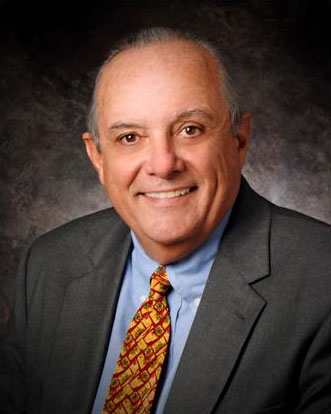
 Barry Cassidy
While in Seattle, I am documenting the decline of a downtown area. A combination of factors has led the city to focus more of its efforts on the market area near Elliot Bay. Things have not changed much since last year. The astounding number of street-level vacancies shows a shrinking city.
There are long strings of vacant storefronts on Third Avenue (25 total) and Fifth Avenue (nine total), leaving Fourth Avenue in jeopardy, with vacancies that were present the year before. The vacancy rate is lower on Second and First near the Public Market border. I was there on a Sunday, and the market area was packed. I am not sure what it is like during the week, but it was a nice day with a lot of foot traffic.
Third Avenue has long struggled with crime, open drug activity, and homelessness. The area was known as a rough but functional retail corridor. The "9.5 Blocks" initiative (mass arrests for drugs/crime on 3rd Ave and nearby) brought temporary improvement, but problems returned quickly, with a visible rise in open drug dealing, shoplifting, and encampments.
In 2019, Downtown Seattle Association led a group of nearly 70 business and property owners, residents, government staff, and other stakeholders to develop a long-term vision for the future of Third Avenue.
Macy’s flagship at 3rd & Pine was struggling but still open. In February 2020, Macy’s closed permanently; this was a major anchor loss right on 3rd Avenue. The COVID lockdown began the next month and lasted until June 2021.
By the time I got there in June 2021, the entire third street sidewalks were filled with tents, businesses were closed, and most never reopened. Even if there were a way to keep your store open, there were too many tents, and the sidewalks were filled with people who did not want customers to visit.
To make matters worse, on 5th Street, the U.S. Bank has been the anchor tenant for decades. In August 2025, it announced it would vacate four of its seven floors — slashing its space from 135,300 sq ft to just 16,700 sq ft. That's a massive reduction of about 118,600 square feet. This closure on one side, combined with the Macy's closure on the other, left the 1400 to 1900 blocks with few businesses on both Third and Fifth, isolating Fourth from the rest of the downtown.
Eventually, I believe Fourth Street will succumb to isolation, leaving the downtown as first and second, along with the market. I do not see much hope for the area unless they raze the historic Macy’s building. Ross closed its store in this area, and Barnes & Noble and Nordstrom Rack have announced plans to move closer to 6th Street.
If this were my downtown, I would be in panic mode. Huge vacant storefronts all over the place, and, depending on the future of undesirable control amid the historic drug district, along with lines of vacant storefronts on Third and Fifth. I see Fourth Street going down the tubes. In my opinion, it is only a matter of time.
That is not to say that Seattle is bad. The day I was there, it was vibrant and alive, with what is left of the designated downtown. Very cool city, but key large vacancies on the streets, taking up to a city block of nothingness, bring gloom to the area as it transitions. It is better not to have a block here and a block there with one or two stores; it tends to look like a transition through a war zone.
The 1400 block of Third has 10 consecutive vacancies, and I counted five in the 1500 block of Fifth Street, so the problem extends across intersecting streets. Third Street is the primary transit stop for the downtown rail and is a bus-only street. I did not detect a heavy hardcore drug scene on Third Street, but I was there early. A few strangers in a strange land wandered, but for the most part, it was hollow and bare, wide and tall.
I started doing a little research into what is going on there. Someone wrote, “Third Street is where all good plans come to die.” It is a big problem. Think about it. The area is where commuters have their first and last things to do in the city: be there. Yet there are issues such as ownership, years of people camping in front of the stores, the history of petty crime and human trafficking, and a general lack of plans that will work.
The core issue is whether the business district remains bifurcated by transit or whether the area's environment is improved in a city way, not a transit interpretation. It would be good to provide people with street-level scale improvements to make it look less stark. Maybe just the opposite: make it really stark in a coordinated framework. Whatever… can't leave it like that.
Barry Cassidy is a freelance grant and economic development consultant. He can be reached at barrycassidy@comcast.net.